
The waters off Provincetown might be likened to a “deep sea disco,” full of life and diversity, with its plants and animals moving together to nature’s beat. For 50 years, the Center for Coastal Studies (CCS) has studied, protected, and taught others about that dance.
The Center’s work involves a complex choreography, from aerial observers flying over Cape Cod Bay to report on the presence of North Atlantic right whales, to Beach Brigade volunteers scouring the beaches of the Outer Cape to remove and analyze marine debris and plastics.
From the plankton that feed humpback whales and seagrass beds that act as nurseries for fish and crabs, to the ocean tides that shape our coastline and the quality of our waters that all life depends on, these are just some of the steps CCS is taking to study and preserve Cape Cod’s rich, interconnected ecosystems:
-
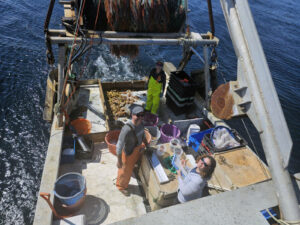
CCS researchers regularly work in close collaboration with Cape fishermen and shellfish growers, gathering data to protect and preserve this vital Cape Cod industry.
-
The CCS Marine Debris & Plastics Program is working to reduce marine debris and plastics that pollute our shores and ocean, including monthly beach cleanups.
-
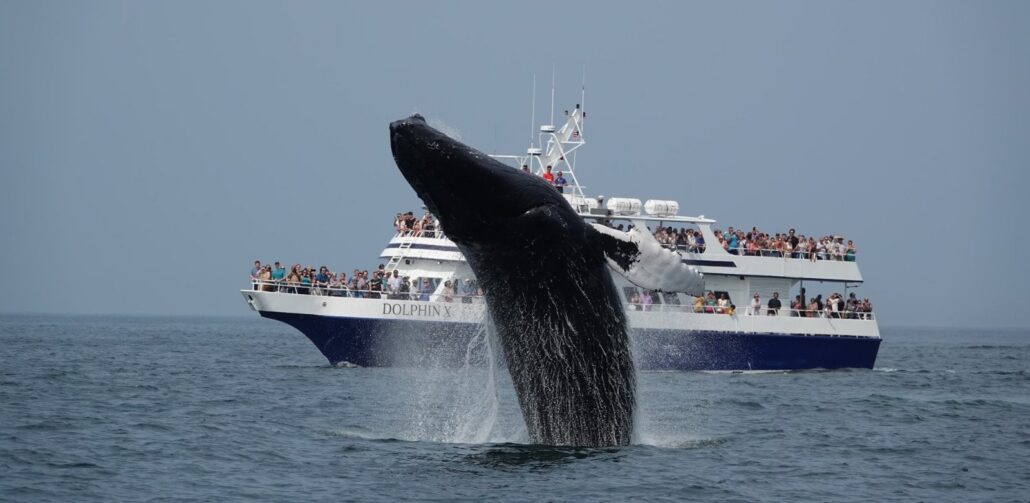
CCS conducts one of the world’s longest-running and most in-depth research programs on humpback whales, housing a state-of-the-art genetics lab onsite in the Hiebert Marine Laboratory to analyze humpback whale DNA and better understand their population genetics.
-
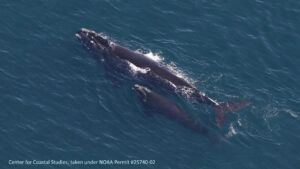
A preferred feeding ground, Cape Cod Bay is home to large concentrations of right whales in the winter and spring. CCS research informs conservation measures, like seasonal vessel speed limits and fishing gear restrictions.
-
Researchers at CCS seek to understand the role seals play in the ecosystem, the impact of human activity, and what seals tell us about the health of the coastal environment.
-
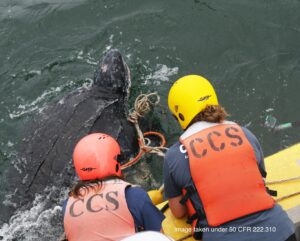
When a marine mammal becomes entangled in ropes, the Marine Animal Entanglement Response (MAER) team is alerted through a 24-hour hotline and sets out from Provincetown’s MacMillan Pier aboard the rescue vessel, Ibis. Since the first whale was disentangled by CCS in 1984, more than 200 whales and marine mammals have been freed by the efforts of the Center for Coastal Studies.
-
CCS is leading efforts to protect seagrass ecosystems both here and around the world. Seagrass is important as it supports biodiversity, protects coastal areas, stores nutrients, and helps mitigate climate change.
-
The Land-Sea Interaction Program leads the research to help ensure the future resilience of our coastal communities and the health of the coastal environment.
-
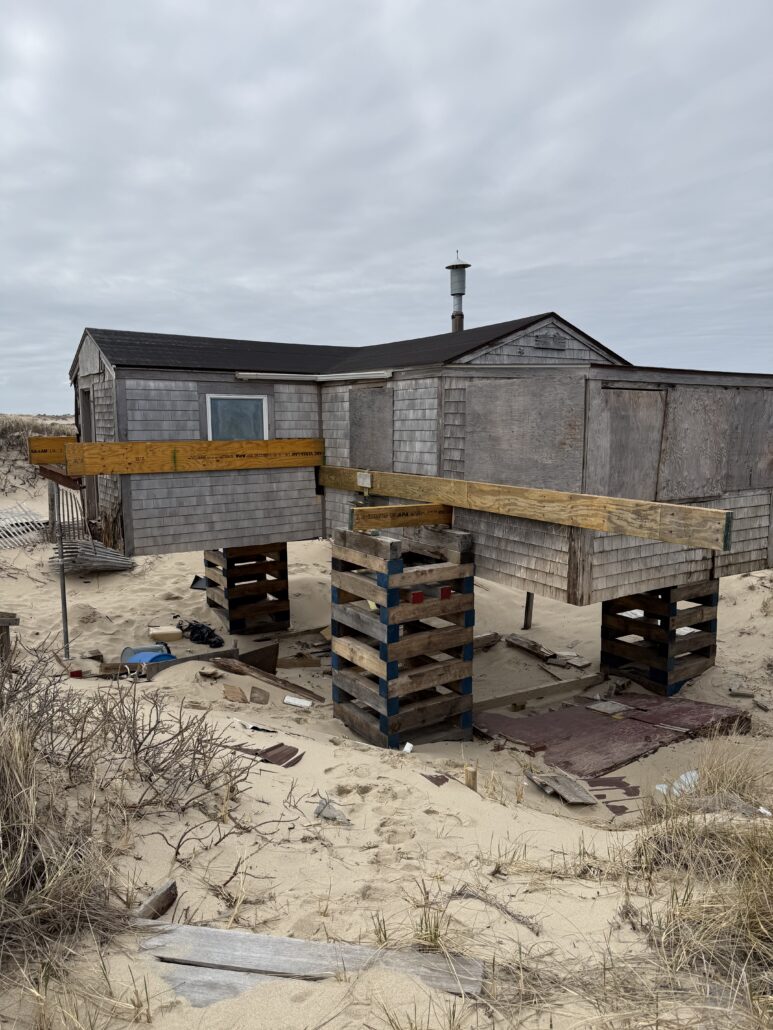
Using state-of-the-art mapping technology, CCS’s Shoreline and Seafloor Mapping Program has mapped all of the Cape Cod Bay shoreline from Provincetown to the Cape Cod Canal, and beyond. The goal is to better understand our evolving shoreline, help towns address shared coastal issues, and prepare for storms.
-
Cape Cod Bay and Nantucket Sound, as well as the region’s estuaries, harbors, rivers, ponds, and lakes, are ecologically rich complexes of coastal and marine habitats. They’re home to vital plant and animal communities, and face immense threats from pollution. CCS collects and analyzes water samples from hundreds of locations around the Cape, utilizing this data to guide efforts to protect and restore water quality.
-
The CCS Marine Education Program welcomes visiting school groups, field trips, and summer programs for children and adults, connecting diverse audiences with marine science. The SEA Space Marine Discovery Center (237 Commercial Street at Whaler’s Wharf) in downtown Provincetown and pop-up learning stations on the beaches in Provincetown provide visitors with hands-on marine science experiences. Stop by this summer to learn more!